Art of Forceps Delivery: Expert Explains The Techniques, Benefits, Risks, and Considerations
Art of Forceps Delivery: Expert Explains The Techniques, Benefits, Risks, and Considerations :
Forceps delivery is a technique where forceps are used to gently grasp and guide the baby through the birth canal. Learn about its benefits, risks, procedures, and key considerations for both mother and baby. Click here to read more about forceps delivery. Have you ever wondered what happens when labour doesn’t progress as expected? Or how do doctors manage situations where delivery needs a little extra help? In those moments, forceps delivery can be a lifesaver. While cesarean sections and vacuum deliveries are more commonly discussed, forceps, a technique that has been around for centuries still play a crucial role in assisting women through difficult labour. We spoke to our expert Dr Vinoad Bharrati, Obstetrician and Gynaecologist, Director, Elite Momz, unit of Rising Medicare Hospital, Pune, who guides us through this often-overlooked method, explaining how it works, when it’s needed, and the benefits it offers for both mothers and babies in specific circumstances.
Table of Content:-
Indications for Forceps Delivery
Maternal Indications:
Foetal Indications:
The Instrument Set
Types of Forceps Application
Prerequisites for Forceps Delivery
Technique For Forceps Delivery
When to Abandon the Procedure
Advantages of Forceps Delivery
Risks Involved
The Role of Forceps in Modern Obstetrics
“Forceps have a rich history in obstetrics, once considered a royal treasure. In ancient times, many women lost their lives and babies due to obstructed labour. It was caregivers like Chamberlain who recognised the need for forceps and began using them for the greater good of all women. At a time when cesarean sections were risky, forceps delivery became a breakthrough,” said Dr Bharrati. In modern obstetrics, however, the use of forceps has declined significantly, with only about 1% of vaginal deliveries involving forceps. While vacuum deliveries are more common, forceps are still more successful in achieving vaginal delivery. Fear of litigation and lack of training have contributed to this decline, but forceps remain an important tool for shortening the second stage of labour.
According to a 2010 study, forceps delivery is a procedure where forceps are inserted into the vagina to gently grasp the baby’s head and assist in guiding it through the birth canal.
Forceps may be the preferred method for delivering premature babies due to the higher risk of cephalohematoma and intracranial haemorrhage with vacuum extraction. Additionally, certain medical conditions, such as cardiac, respiratory, and neurological issues, can prevent the necessary maternal effort for successful vacuum extraction during the second stage of labour, as stated in the British Medical Journal (BMJ).
Indications for Forceps Delivery
Forceps can be used in labour for both maternal and foetal indications:
Maternal Indications:
Maternal exhaustion
Cardiac disease
Epilepsy in maternal side-prolonged second stage
Foetal Indications:
After coming ahead of the breech
In preterm as a protective cage
Foetal distress with the head descending below the ischial spines
The Instrument Set
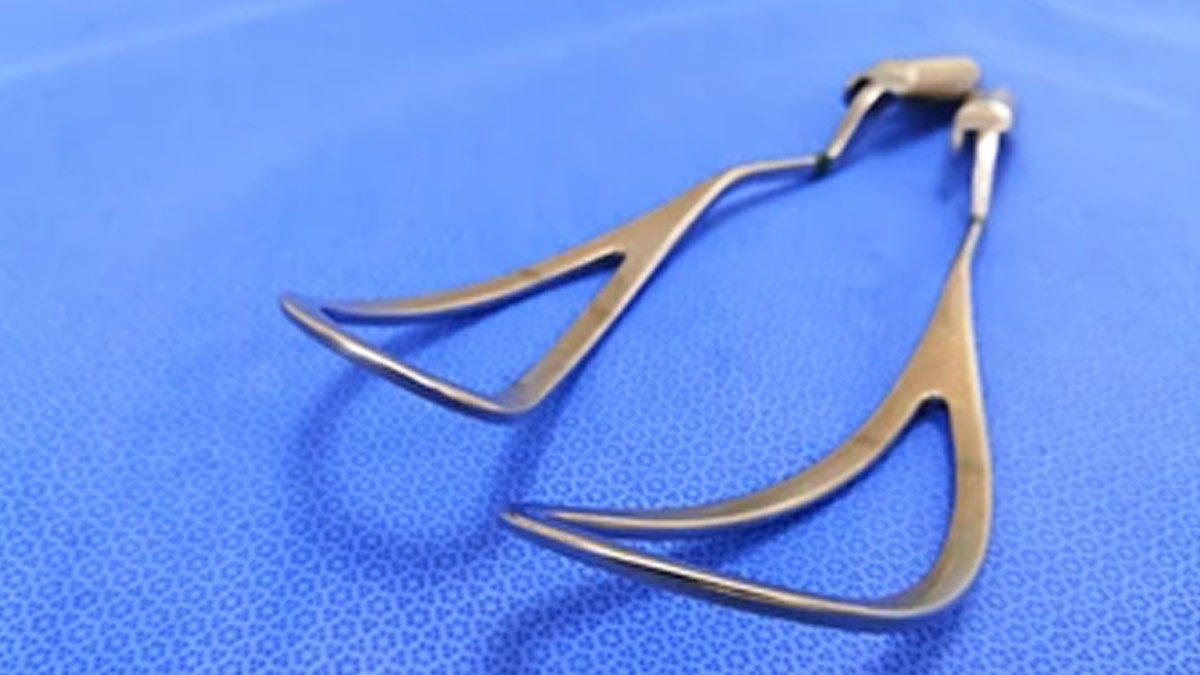
“The forceps instrument set consists of two blades: left and right, designed for maternal side application. The blades include a handle, lock, shank, and fenestrated blade. There are different types of forceps, such as Kielland, Simpson, and Wrigley’s, each with specific curves: cephalic and pelvic,” said Dr Bharrati.
Types of Forceps Application
The process of using forceps is called a forceps application. Dr Bharrati listed the types of forceps applications as follows:
Outlet forceps
Low forceps
Midcavity forceps
High forceps
In modern obstetrics, only outlet and low forceps are used and midcavity and high forceps are not used due to the high complication rate.
Prerequisites for Forceps Delivery
For a forceps-assisted vaginal delivery, the following prerequisites must be met:
Informed consent
Experienced obstetrician
The cervix should be fully dilated
Complete empty urinary bladder
Foetal head visible at introitus
Adequate pelvis
Foetal weight estimated before labour
Known foetal head position
Readiness for a backup plan if the forceps application fails
Technique For Forceps Delivery
In clinically indicated situations, and when all prerequisites are met, local anaesthesia or epidural anaesthesia is administered. A right mediolateral episiotomy (cut in the perineum) is performed to prevent injury to the anal sphincter.
“The forceps application starts by positioning the left blade along the pelvic curve and the right blade along the cephalic curve. If both blades lock properly, it indicates the correct application. If the blades fail to lock, the procedure should be discontinued. Once both blades are securely applied, the obstetrician applies a pull using the forearm in a downward and outward direction. After the foetal head emerges from the perineum, the blades are unlocked and removed, and the delivery proceeds as per routine protocol,” explained Dr Bharrati.
When to Abandon the Procedure
No descent of the head despite pulling
Forceps do not lock properly
The foetal head does not emerge after three pulls
Advantages of Forceps Delivery
Avoidance of Cesarean Section: Forceps delivery helps avoid the need for a cesarean section.
Lower Morbidity: Compared to a cesarean, forceps delivery has less morbidity.
Immediate Mobility: Women can become mobile right after the procedure.
Less Strain on the Heart: Forceps reduce the load on the heart during the second stage of labour.
Assisting Exhausted Mothers: It provides relief to mothers who are exhausted or have cardiac/neurological conditions, reducing the duration of the second stage of labour.
Cost-Effective: Unlike cesarean sections, forceps delivery does not require expensive instruments or electrical equipment.
Risks Involved
Maternal perineal injuries
Excessive bleeding
Foetal injuries
The Role of Forceps in Modern Obstetrics
“In skilled hands, forceps can be a valuable tool in avoiding cesarean sections, especially in difficult or preterm labour situations. They can also assist in breech deliveries, particularly in the second twin. Failure of forceps is much less as compared to vacuum delivery. The procedure also eliminates the need for maternal effort, offering a safer alternative for exhausted mothers,” said Dr Bharrati.
Institutions that use forceps regularly tend to have lower cesarean section rates, highlighting its potential for preserving vaginal deliveries. Furthermore, the use of forceps offers junior obstetricians an opportunity to learn from experienced practitioners, ensuring this valuable skill is not forgotten.